Settling Foundations, Porches and Garage Floors in Crown Point
Foundation settlement repair in Crown Point usually starts with something that dropped: a garage floor pulling away from the house, a front stoop tipping, a corner of the basement sinking with cracks above it. On clay ground the cause is usually water and soft soil under the load, and in newer subdivisions loose backfill is a frequent suspect.
Fixr's January 2026 guide puts settling and sinking repairs at $4,500–$25,000, with piers at $1,000–$3,000 each and full underpinning at $10,000–$40,000. Lifting a sunken garage, porch or patio slab costs $500–$1,900.
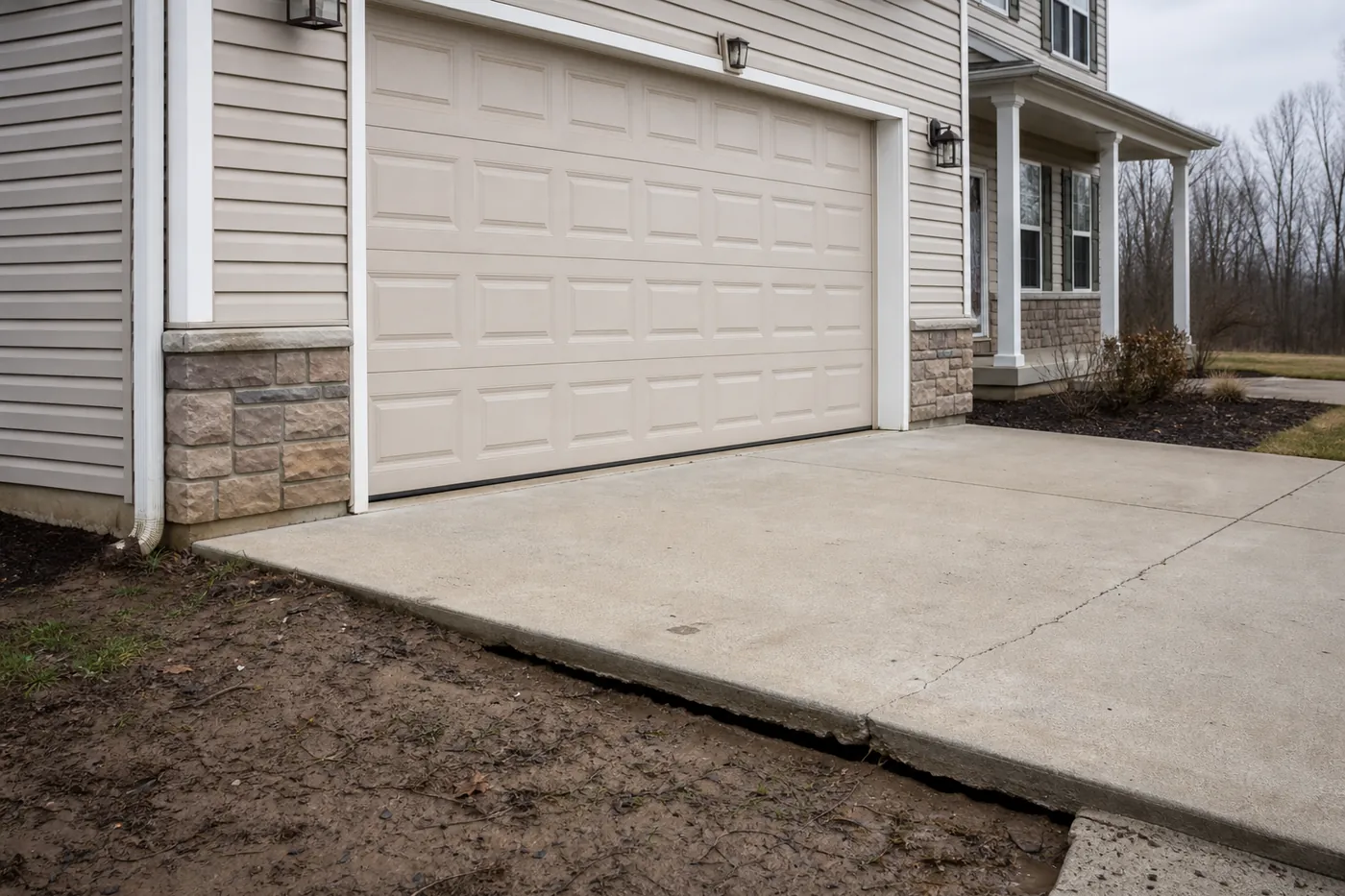
Why do newer Crown Point houses show settlement?
Building a basement means digging a hole wider than the house and filling the gap back in. If that backfill was placed loose, it settles for years, so the yard begins to slope toward the walls, the stoop and garage slab sink at their outer edges, and roof water collects where it should not. Sunken slabs in the first few years are often this, not a failing footing. Regrading and slab lifting may be all it needs.
Wet hollows, muck and soft ground
Deeper settlement comes from what is under the footing. In the USDA soil sample around Crown Point, Pewamo silty clay loam fills the low spots, where water can stand from December to May, and two points fell on Houghton muck, an organic soil of decayed plant material. Clay that is wet for months loses strength, and muck compresses under load. A corner sitting over either may keep moving until it is carried down to firmer soil.
Piers, underpinning and slab lifting compared
- Steel push piers: driven beside the footing until they reach firm soil, then used to hold and sometimes lift.
- Helical piers: screwed in, with torque readings that show how much they can carry; common under porches and lighter walls.
- Concrete piers or underpinning: new supports cast beneath the footing, the biggest job on the list.
- Slab lifting: polyurethane foam or a cement slurry injected beneath a garage floor, stoop or walk; suits slabs that dropped on settled backfill.
Prices for each are on the foundation repair cost page.
Check the builder warranty before anyone lifts
Indiana law lets builders warrant a new home against major structural defects for ten years, and it counts damage from soil subsidence as a structural defect unless a flood, earthquake or other natural disaster caused it. If your house is inside that window and the builder gave the warranty, put the problem in writing to the builder first. See the builder warranty guide.
Questions homeowners ask
My garage floor dropped in a newer house. Is that the foundation?
Usually not. Garage floors are slabs poured on fill inside the foundation walls, and they sink when that fill settles. The house's footings carry the walls separately. If the gap is only at the slab, lifting it is the usual answer; if the walls next to it are cracking too, have the footing checked.
Tell a local specialist what you see
A crack that showed up after the first winter, a basement that seeps every April, a garage floor that dropped: describe it in a line or two. One independent foundation and waterproofing specialist who covers Crown Point reads it.