Cracked or Bowing Basement Walls on Crown Point Clay
Basement wall crack repair in Crown Point covers two quite different houses. In a newer home the wall is usually poured concrete, and many cracks are shrinkage from curing. In an older one it may be block, where a sideways crack means the wet clay outside is winning. The right repair starts with telling the two apart.
Fixr's 2026 guides price sealing a crack at $200–$1,000 and epoxy injection at $250–$1,000 per crack. Stabilizing a bowing wall runs $4,000–$15,000, with carbon fiber strips at $4,000–$12,000 and tiebacks at $1,500–$2,000 apiece.
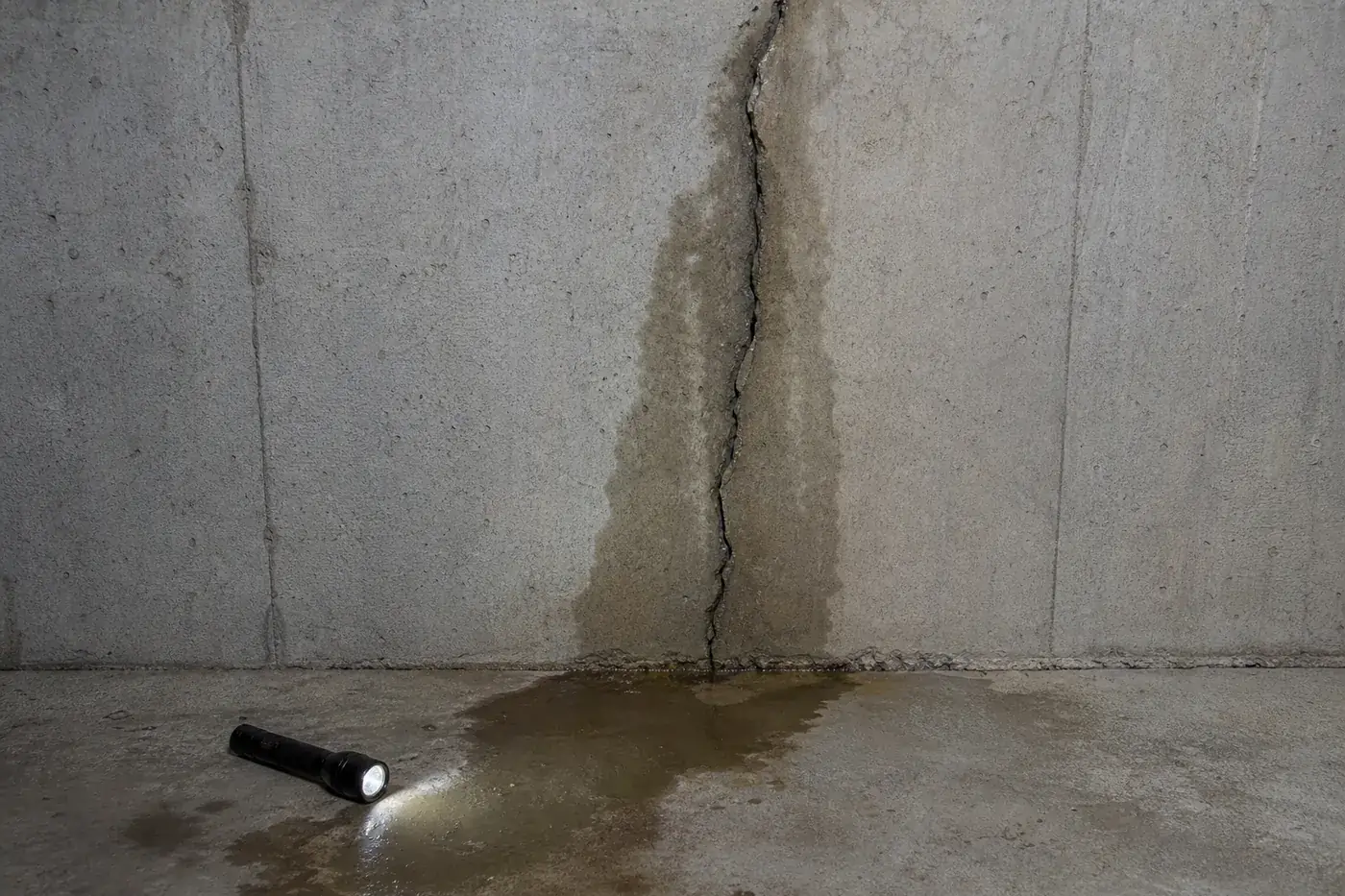
Which basement wall cracks matter?
In poured concrete, a thin vertical crack that stays dry is usually shrinkage and can be marked and watched. Diagonal cracks from a window corner, cracks wider at one end, and anything that leaks need a closer look. In block, a horizontal crack along a mortar joint partway up the wall, or stair-step cracks heading for a corner, mean pressure or settlement. Any wall that is out of plumb by more than a little needs a specialist, whatever the crack looks like.
Why does wet clay push so hard on a Crown Point wall?
Clay holds water, and saturated soil is heavy. The USDA describes the Elliott soil that covers much of the area as silty clay loam till with a perched water table 1 to 2 feet below the surface in late winter and spring. Each winter the soggy clay in the upper few feet turns to ice and swells; Indiana's code sets Lake County's frost depth at 36 inches. A poured wall resists by cracking; a block wall bends at a joint.
Injection, carbon fiber, tiebacks or excavation
- Epoxy or polyurethane injection: fills a poured-wall crack through its full thickness. Epoxy bonds the concrete; polyurethane mainly stops water.
- Carbon fiber strips: glued to the inside face to stop further inward movement; they do not straighten a wall.
- Tiebacks or wall anchors: rods through the wall to plates or helixes in firm soil outside; some can be tightened over time.
- Excavate and rebuild: for walls that have moved too far, with new drainage and backfill while it is open.
Compare dated prices on the Crown Point foundation repair cost guide.
City license and a written contract
Anyone listed on a Crown Point building permit must hold a current city license, issued through the Clerk-Treasurer. Whether a wall repair needs a permit is the Building Department's call, so ask before work begins. Indiana requires home improvement contracts over $150 to be in writing; make sure yours names the method, the length of wall and any warranty.
Questions homeowners ask
Should I seal a hairline crack in my new poured basement wall?
If it is dry and not growing, sealing is optional; many owners mark the ends with a pencil and date and watch it through a winter. If it seeps, injection is the usual fix. If the house is within a builder warranty period, report it to the builder in writing before anyone seals it.
Tell a local specialist what you see
A crack that showed up after the first winter, a basement that seeps every April, a garage floor that dropped: describe it in a line or two. One independent foundation and waterproofing specialist who covers Crown Point reads it.