Basement Waterproofing on Crown Point's Wet Clay: Sumps, Drain Tile and Grading
Basement waterproofing in Crown Point is mostly about water that has nowhere to go. Clay drains slowly, so rain and snowmelt build up against the walls and under the floor, and a perimeter drain and sump are the usual defense. When those fall behind, or were never there, water shows up at the floor edge.
Fixr's February 2026 guide puts basement waterproofing at $3,000–$10,000, averaging $5,000. An interior perimeter drain runs $40–$120 a foot, a sump pump $600–$2,500 and regrading $500–$3,000. Exterior work and finished basements push jobs toward the guide's $20,000 high end.
Why do Crown Point basements take on water?
Mostly perched groundwater. USDA soil descriptions for Elliott and Blount soils, both common here, describe slow permeability in dense till with water perched near the surface in late winter and spring, and Pewamo soils in low spots can be ponded. NOAA's 1991-2020 normals for the Valparaiso airport, the nearest station, show summer as the wettest season at 11.35 inches for June through August, with about 7 days a year bringing an inch or more of rain. Downspouts and sunken backfill send that water straight to the wall.
What Crown Point foundation plans already call for
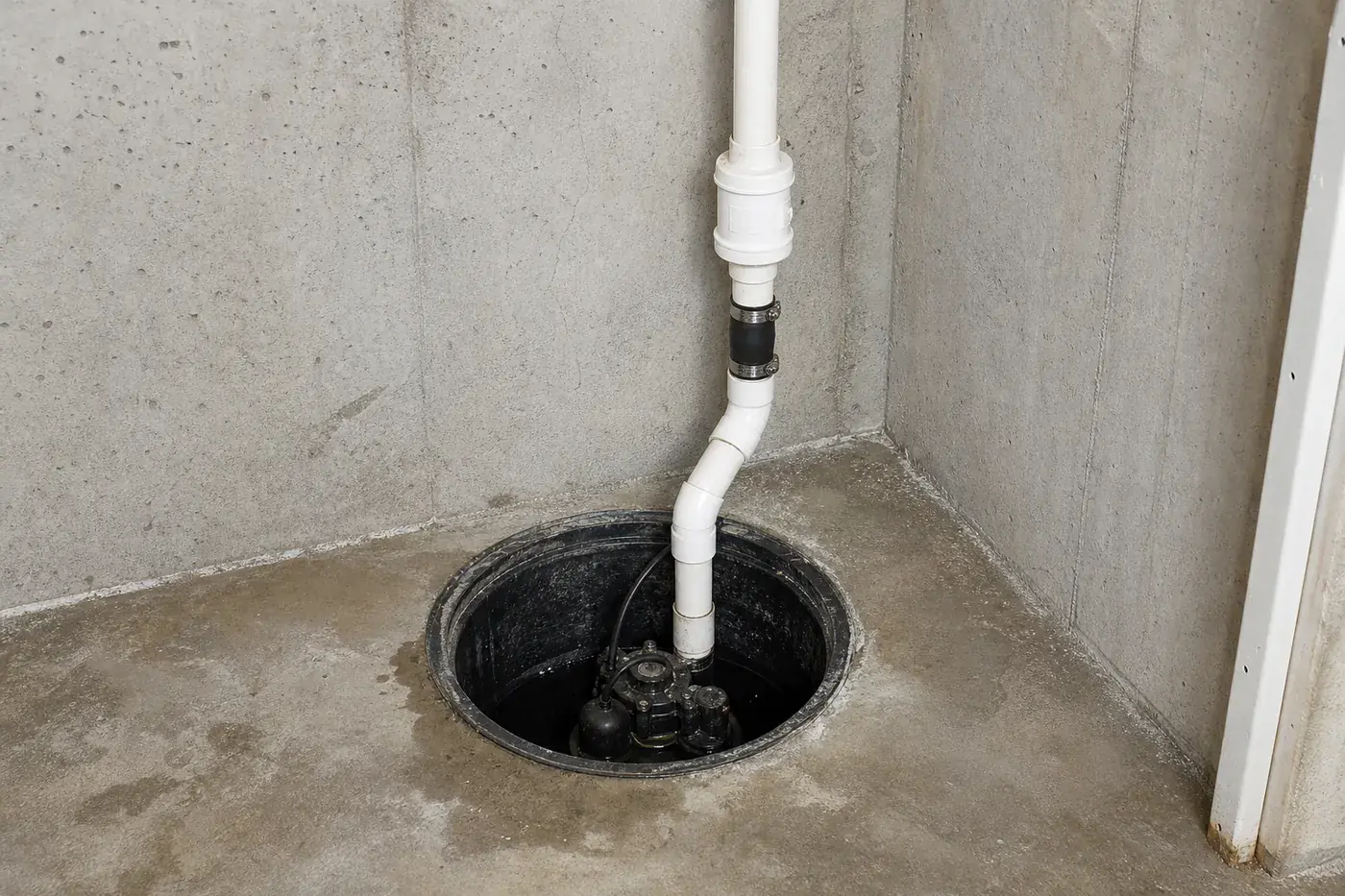
For new building permits, the City of Crown Point Building Department lists a foundation plan showing footing size, waterproofing material, vapor retarder thickness, sump pump, perimeter drain and crawl vents. Indiana's code also requires a sump pit in most soils other than clean sands and gravels, at least 18 inches across and 24 inches deep below the floor. Many newer houses therefore already have a drain and sump, and the fix is often a better pump, a backup or a cleared line rather than a new system.
Sump, drain tile or an outside membrane?
- Grading and downspouts: rebuild settled backfill so soil falls away from the house and carry roof water well out. Cheapest, and often overdue on houses from the last twenty years.
- Sump upgrade or backup: where a sump exists but runs constantly or failed in a storm.
- Interior perimeter drain: the floor edge is opened, perforated pipe laid in stone and tied to a sump; the usual answer for older houses with none.
- Exterior membrane and drain: dug from outside, sealing the wall and draining the footing; costlier, and slow in clay.
Fixr's figures for each are on the Crown Point cost guide.
After the August 2026 storms
Lake County was part of FEMA's major disaster declaration DR-4933 for the August 2026 severe storms, tornadoes and flooding, one of four federal declarations for the county since 2016. If water came in during that storm, photograph the damage, keep receipts and check what your insurance covers before a waterproofing contract is signed.
Questions homeowners ask
My newer house has a sump pump that runs constantly. Is that normal?
On wet clay in spring, frequent cycling is common and shows the drain tile is working. Running nonstop in dry weather can mean a high water table, a stuck float or water draining back from the discharge line. Have the discharge checked first, and consider a battery or water-powered backup if the pump carries that much load.
Tell a local specialist what you see
A crack that showed up after the first winter, a basement that seeps every April, a garage floor that dropped: describe it in a line or two. One independent foundation and waterproofing specialist who covers Crown Point reads it.