Is This Crack Normal? Foundation Signs in Newer and Older Crown Point Homes
Whether a crack or gap is worth worrying about depends partly on the house. A two-year-old poured basement and a 1930s block foundation crack for different reasons. Each answer below leads with the likely cause, then what to do next.
In a newer house, thin dry vertical cracks and dropped garage slabs are usually curing and backfill settlement. In any house, a horizontal crack, a wall out of plumb or a crack that keeps widening points to soil pressure or settling and needs a specialist. Spring seepage at the floor edge is usually groundwater.
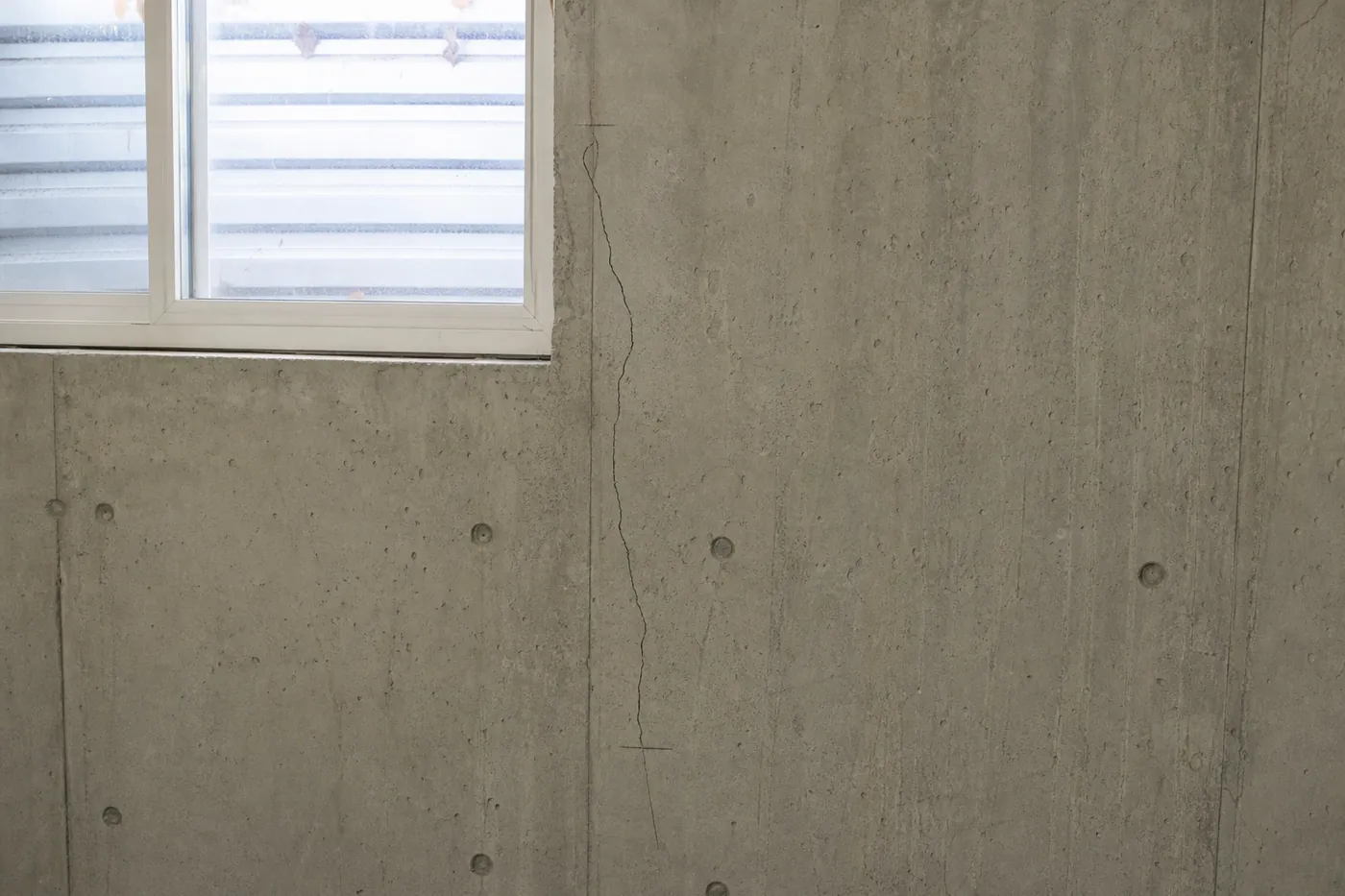
Newer house: thin vertical cracks in a poured wall. Normal?
Usually. Concrete shrinks as it cures, and a hairline vertical crack, often near a window, is common in the first years. Mark its ends, date it and look again after a winter. If it stays dry and does not grow, it is cosmetic. If it seeps, injection fixes it. See basement wall cracks.
Newer house: the garage floor or stoop dropped. Why?
Most often the fill beneath it settled. Slabs at the edge of a house sit on soil that was dug out and replaced during construction, and it compacts over time, especially when roof water soaks it. Lifting the slab usually fixes it if the house walls are not cracking. See settlement repair.
Newer house: the yard now slopes toward the foundation. What happened?
The backfill beside the walls sank. A few years after construction this is common, and it turns every rain and thaw into water against the basement. Rebuilding the grade so soil falls away from the house is cheap compared with any fix inside, and it should come first.
Any house: a horizontal crack across a block wall. How urgent?
Treat it as structural until someone measures it. A sideways crack along a mortar joint, partway up a block wall, usually means wet or frozen clay pressing in. Have it looked at soon if the wall leans, blocks have shifted, or the crack has opened since you first noticed it.
Any house: water seeps where the floor meets the wall every spring. What is it?
Groundwater, usually. Clay soils around Crown Point hold perched water close to the surface from late winter into spring, and it pushes in at the joint between floor and wall. Check downspouts, grading and the sump first. See basement waterproofing.
Older house: stair-step cracks near a corner. What now?
A crack that steps through the mortar of block or brick, wider at the top, suggests that corner has settled. Measure its width, watch it for a season and look for doors sticking above it. Growing cracks point to settlement repair rather than patching.
Older house: the floor dips toward the middle. Foundation or framing?
Often framing. A central beam, its posts or their footings can sink or sag while the outer walls stay put. Look for a post that leans or sits on a cracked spot in the basement floor. It is usually a smaller repair than the outer foundation, but it still needs a specialist.
Townhouse: a crack along the shared wall. Whose problem is it?
It depends on how the property is set up. Read your association's covenants and your deed to see who maintains foundations and exterior walls, and tell the association in writing. A repair on one side may affect the neighbor's unit, so the work is easier when both owners and the association agree first.
Tell a local specialist what you see
A crack that showed up after the first winter, a basement that seeps every April, a garage floor that dropped: describe it in a line or two. One independent foundation and waterproofing specialist who covers Crown Point reads it.